Your documentation might be invisible to AI systems.
While search engines crawl your docs for Google results, AI models like ChatGPT, Claude, and Gemini need a different signal: an llms.txt file that tells them exactly what content to index.
Most documentation platforms ignore this. They'll help you rank on Google, but leave you out of AI training data and responses.
What is llms.txt?#
The llms.txt file is a standardized format that tells AI systems which pages on your site contain valuable content for training and responses. Think of it as a sitemap, but for large language models.
Here's what a basic llms.txt looks like:
# Documentation Pages
https://docs.example.com/getting-started
https://docs.example.com/api-reference
https://docs.example.com/tutorials/quick-start

# Last updated: 2024-01-15
AI systems check for this file at yoursite.com/llms.txt and prioritize those URLs for indexing.
Why it matters: AI models are increasingly how developers discover and learn about tools. If your docs aren't AI-discoverable, you're missing a huge audience.
Which Documentation Platforms Support llms.txt?#
I tested the top documentation platforms. Here's what actually generates llms.txt files:
| Platform | Auto llms.txt | Price | Manual Setup Required |
|---|---|---|---|
| Dokly | ✅ Yes | Free, or $99/month (Team) | No |
| Mintlify | ❌ No | $300/month | Yes |
| GitBook | ❌ No | $65/month | Yes |
| ReadMe | ❌ No | $99/month | Yes |
| Notion | ❌ No | $8/user | Yes |
| Bookstack | ❌ No | Free | Yes |
Only one platform generates llms.txt automatically. The rest require manual setup or don't support it at all.
Mintlify: No llms.txt Support#
Price: $300/month for teams
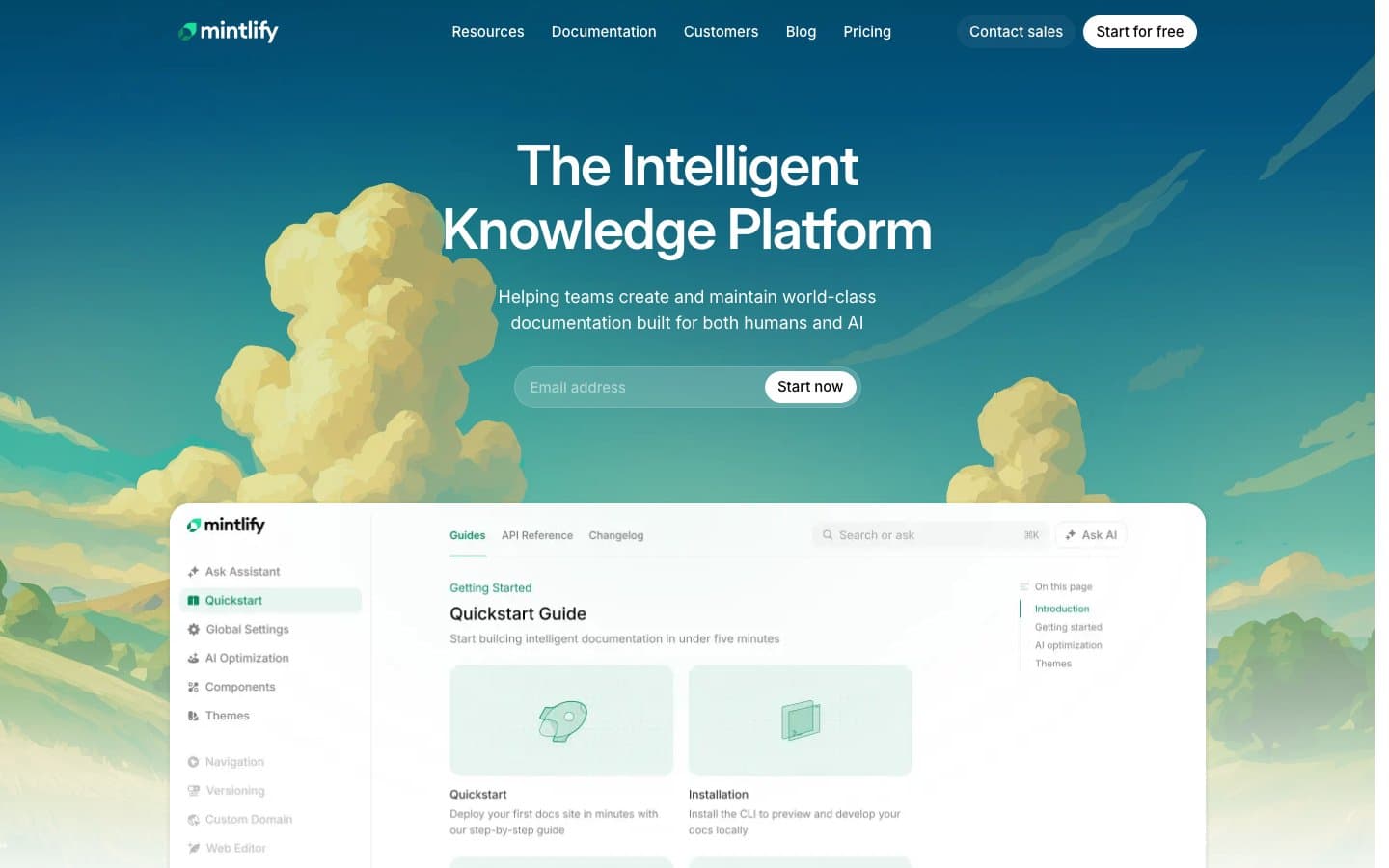
Mintlify focuses on beautiful documentation sites but completely ignores AI discoverability.
What you get:
- Beautiful default themes
- Good SEO optimization
- API playground
- Analytics dashboard
What's missing:
- No llms.txt generation
- No AI optimization features
- You'd need to manually create and maintain the file
The problem: At $300/month, you'd expect AI-forward features. Instead, you get a platform built for 2020's SEO world, not 2024's AI reality.
Best for: Teams with big budgets who only care about Google rankings.
GitBook: SEO-First, AI-Last#
Price: $65/month for premium features
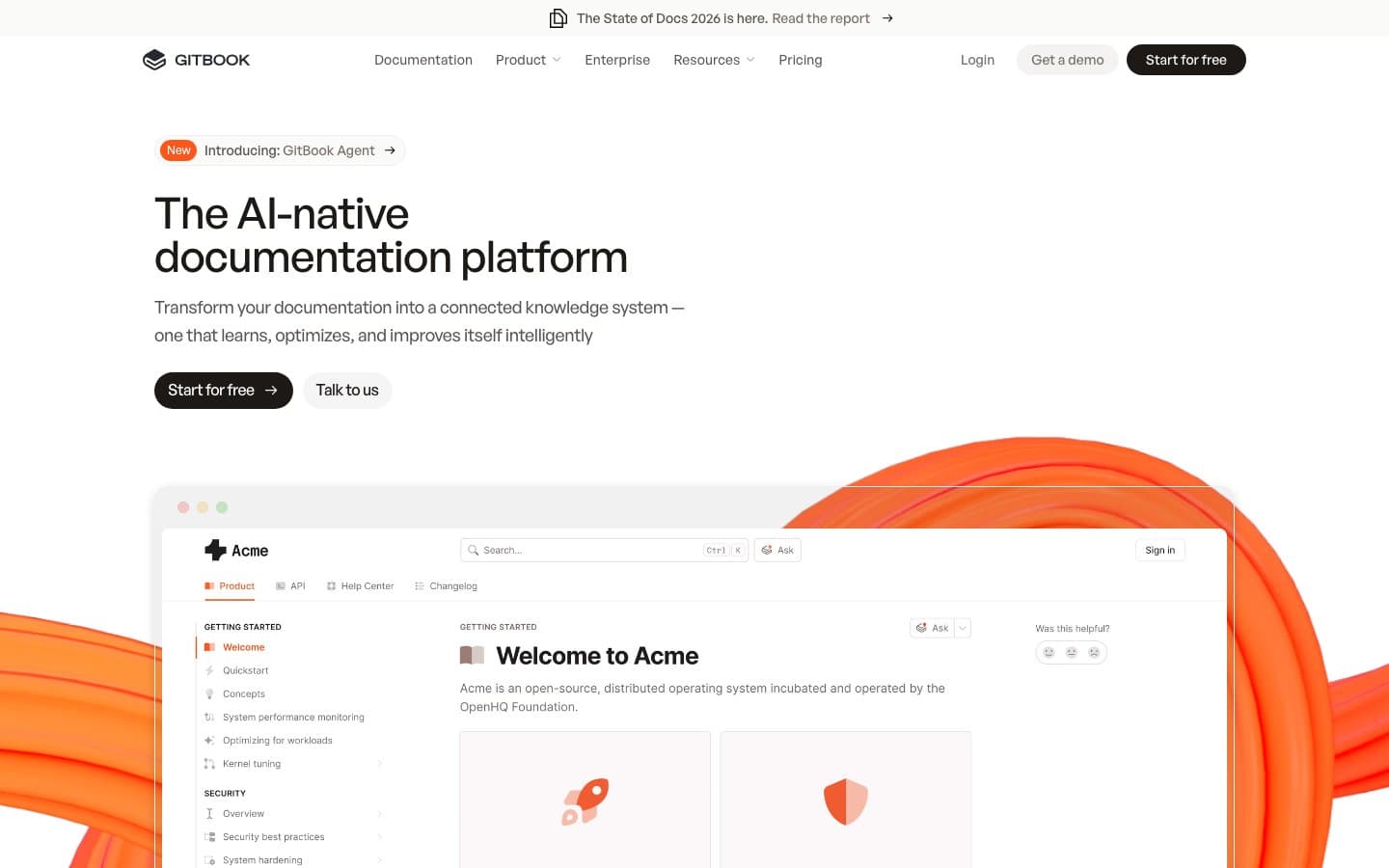
GitBook builds documentation that looks great but stays invisible to AI systems.
What you get:
- Clean, wiki-style interface
- Good collaboration features
- Decent SEO optimization
- Integration with Git workflows
What's missing:
- No automatic llms.txt generation
- Limited AI optimization
- Manual file management required
Workaround: You can manually create an llms.txt file, but GitBook won't update it when you add new pages. You'll need to remember to update it yourself every time.
Best for: Internal documentation teams who don't need AI discoverability.
ReadMe: API Docs Without AI#
Price: $99/month starter plan
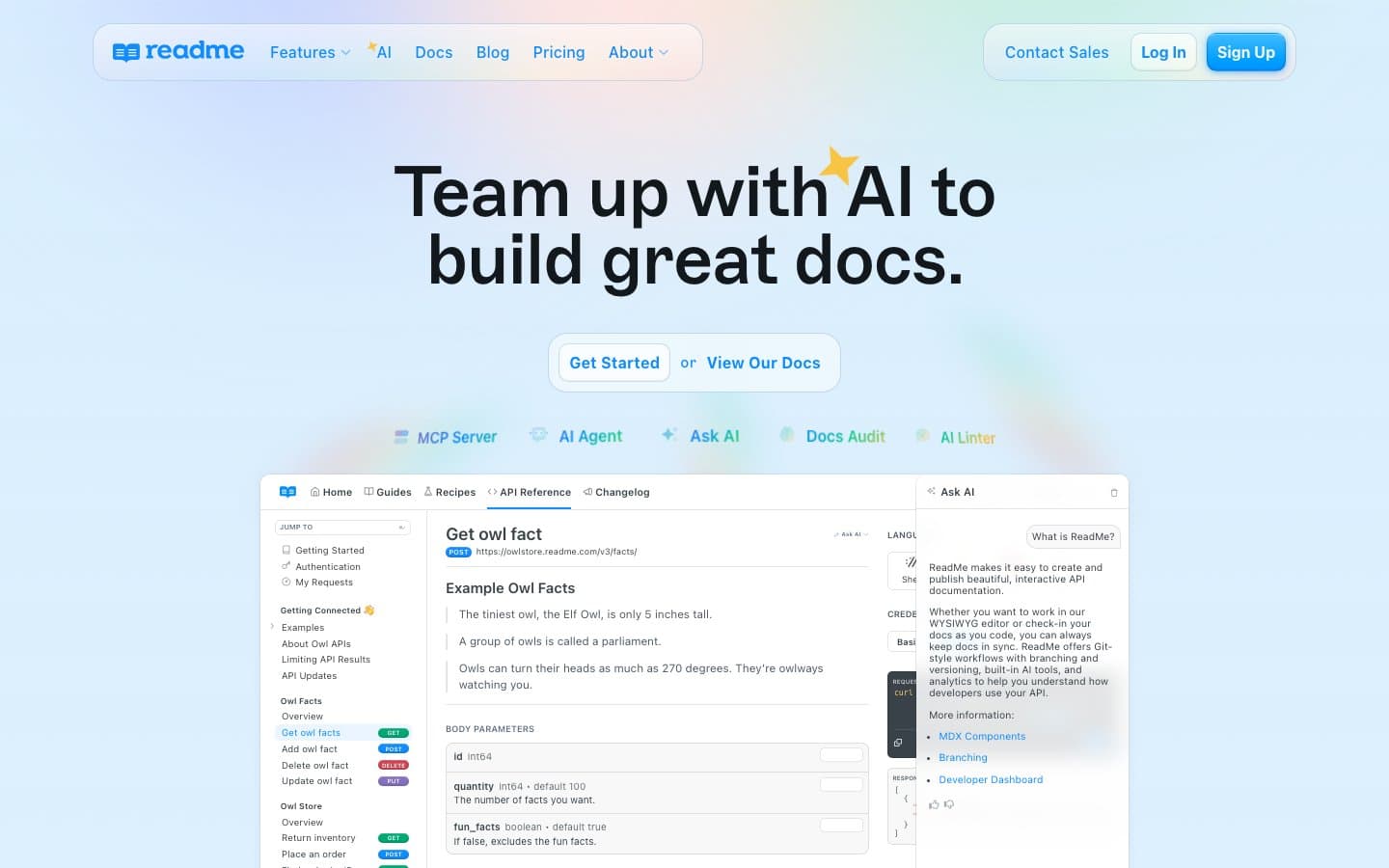
ReadMe excels at API documentation but ignores the AI discovery layer.
What you get:
- Excellent API playground
- Auto-generated API docs
- Usage analytics
- Developer hub features
What's missing:
- Zero llms.txt support
- No AI optimization tools
- Manual implementation required
The irony: API docs are exactly what developers ask AI systems about most. ReadMe builds great API docs that AI can't easily find.
Best for: API-first companies who don't mind the AI blind spot.
Why Most Platforms Skip llms.txt#
Three reasons documentation platforms avoid llms.txt:
-
It's new. Most platforms built their tech stacks before AI became mainstream.
-
It's not Google. Platform builders optimize for search engines, not language models.
-
It's manual work. Generating and maintaining llms.txt files requires extra development effort.
Result: You get beautiful docs that Google can find, but AI systems ignore.
Dokly: Built for AI Discovery#
Price: Free plan, Team $99/month
Dokly automatically generates llms.txt files for every documentation site, on every plan including Free.
What you get:
- Auto-generated llms.txt (updates when you publish)
- Visual MDX editor (no Git required)
- AI writing with monthly credits included (15 on Free, 1,500 on Team)
- Works with your AI agent over MCP on Team and up: it writes drafts, you review a diff, then publish
- Custom domains and themes
- Fast setup (5 minutes)
What's missing:
- Smaller brand than Mintlify/GitBook
- No SSO yet (coming soon)
- Newer platform
Why it works: Dokly was built in 2024, designed for a world where AI systems matter as much as search engines.
Best for: Teams who want their docs discoverable by both Google and AI systems.
How to Add llms.txt Manually#
If you're stuck with a platform that doesn't generate llms.txt, here's how to add it yourself:
- Create the file: Make a plain text file called
llms.txt - List your URLs: Add one documentation URL per line
- Upload to root: Place it at
yoursite.com/llms.txt - Update regularly: Add new URLs when you publish content
Example llms.txt:
# API Documentation
https://docs.yoursite.com/api/authentication
https://docs.yoursite.com/api/endpoints
https://docs.yoursite.com/api/errors

# Guides
https://docs.yoursite.com/getting-started
https://docs.yoursite.com/tutorials

# Last updated: 2024-01-20
The problem: You'll forget to update it. Most manual llms.txt files become outdated within weeks.
AI Discovery vs SEO: Why Both Matter#
Google SEO gets your docs found in search results. AI discovery gets your product mentioned in ChatGPT responses.
Both matter:
- SEO traffic: Developers searching for solutions
- AI mentions: Developers asking AI for recommendations
- Training data: Your docs help AI models understand your product
Most platforms only solve half the problem. They optimize for Google but ignore AI systems entirely.
The Real Cost of Missing llms.txt#
Your documentation might be comprehensive, but if AI systems can't find it:
- Developers ask ChatGPT about your competitor instead
- AI training data favors competitors with better AI discovery
- You miss the growing segment of AI-first developers
Example: A developer asks Claude "What's the best documentation platform?" If your platform has no llms.txt file, Claude might not even know you exist.
Choosing a Platform: AI-Ready vs AI-Blind#
Pick based on your priorities:
Choose Dokly if:
- You want automatic llms.txt generation
- You care about AI discoverability
- You want modern features at a fair price
- You need fast setup without Git complexity
Choose Mintlify if:
- You have a $300/month budget
- Brand recognition matters more than AI features
- You only care about Google SEO
- You don't mind manual llms.txt maintenance
Choose GitBook if:
- You need wiki-style collaboration
- Internal docs are your main use case
- AI discovery isn't important
- You prefer the familiar interface
Choose ReadMe if:
- API documentation is your primary need
- You want the best API playground
- You're willing to pay $99/month
- AI optimization isn't a priority
What's Next for Documentation Platforms#
Smart platforms will add AI-first features:
- Automatic llms.txt generation (like Dokly already does)
- AI-optimized content formatting
- Integration with AI training datasets
- Analytics showing AI system crawling
Platforms that ignore AI discovery will lose relevance as developers increasingly rely on AI for technical answers.
Start Building AI-Discoverable Docs#
Your documentation deserves to be found by both Google and AI systems.
Dokly generates llms.txt files automatically, so your docs stay discoverable as AI becomes more important for developer discovery.
Try Dokly free — no credit card required. Get your docs online in 5 minutes, complete with automatic llms.txt generation.